




This photograph shows a partial view of a Volvo X30 electric car with the company logo at the Volvo factory in Ghent on April 25, 2025. This factory will produce the Volvo X30 100% electric model for the European market.
Nicolas Tucat | Afp | Getty Images
Shares of Sweden’s Volvo Cars tumbled more than 28% on Thursday, putting the company on track for its worst trading day ever.
The automaker, which is owned by China’s Geely Holding, posted a substantial drop in fourth-quarter operating profit, citing the impact of U.S. tariffs, negative currency effects and weak demand.
Volvo Cars said fourth-quarter operating income excluding items affecting comparability came in at 1.8 billion Swedish krona ($200.46 million), reflecting a 68% drop compared to the same period a year prior.
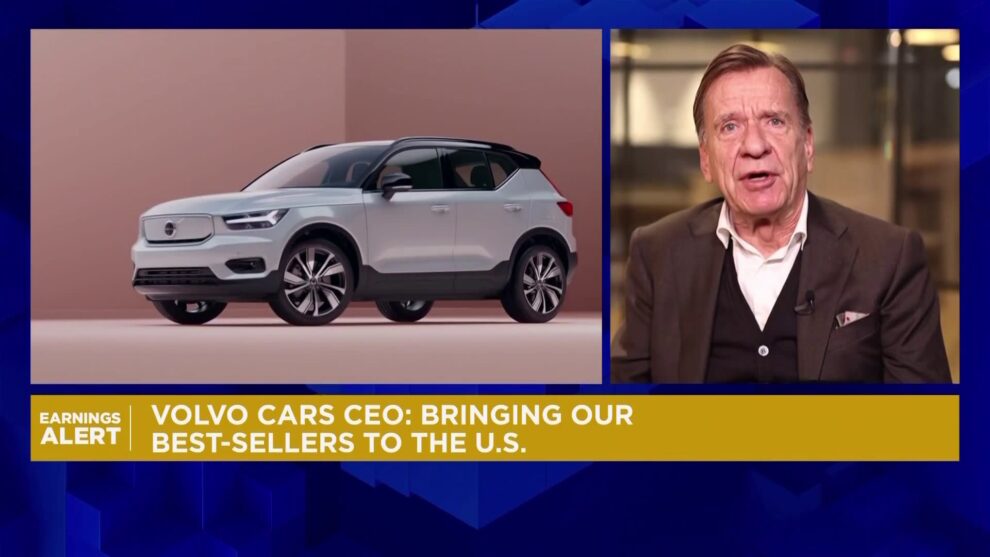
“We have a very challenging market, especially in China, very tough competition. All of our European colleagues have the same problem,” Volvo Cars CEO Hakan Samuelsson told CNBC’s “Europe Early Edition” on Thursday.
He added the discontinuation of EV incentives in the U.S. and China were also contributing to “a very challenging external environment.”
“But internally we have had very good work done with lowering our costs and securing a positive cash flow, so that I would highlight as the most important positive things that we have reached during the year,” he added.

Shares of Volvo Cars were last seen down 28.2%. A single-session fall of more than 11.2% would reflect the firm’s worst trading day ever.
Analysts at UBS said that based on Volvo Cars’ profit miss, they anticipate 10%-15% downgrades to full-year 2026 consensus earnings before interest and taxes (EBIT), “possibly more given the underlying EBIT margin was close to 0%” in the final three months of 2025.
A tough year ahead
The U.S. and EU agreed to a framework trade deal in July last year, one which saw the Trump administration impose a blanket tariff of 15% on most EU goods, a significant reduction from Trump’s threat of 30% and almost halving the tariff rate on Europe’s auto sector from 27.5%.
Industry groups, which tentatively welcomed the trade deal at the time, expressed deep concern about the costs associated with the new tariffs.
Volvo Cars has long been considered one of the most exposed European carmakers to U.S. tariffs.
Looking ahead, Volvo Cars said deliveries of its new and fully electric EX60 mid-size SUV will ramp up during the second half of the year.
However, it warned 2026 is likely to be another challenging one, with continued pricing pressure, tariff effects, regulatory uncertainty and softer consumer sentiment likely to weigh on the industry.