





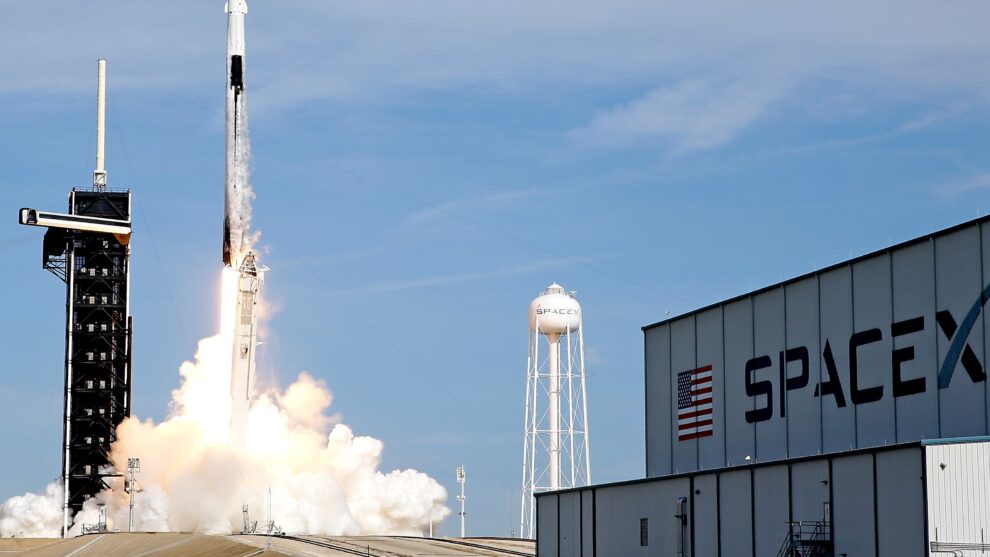
For years, regular investors have had the same frustration with SpaceX:
By the time a legendary private company finally goes public, most of the biggest gains have already happened behind closed doors.
Early venture funds, insiders, employees, and institutional investors get access long before the IPO. Then retail investors finally get a chance to buy after the valuation is already enormous.
But a new category of ETFs and publicly traded venture funds is changing that.
Instead of waiting for the IPO itself, investors are increasingly using publicly traded funds that already own private SpaceX exposure today. If SpaceX eventually IPOs at a massive valuation, those funds could instantly become one of the easiest ways for ordinary investors to benefit immediately, while still having daily stock-market liquidity.
The interesting part is that most of these funds are not just “SpaceX bets.” Many also own some combination of elite AI, defense, semiconductor, and large-cap tech companies.
So you are not necessarily buying a single speculative moonshot. In many cases, you are buying a basket of some of the most sought-after growth assets in the world.
Why People Care About SpaceX So Much
There are very few companies in modern history with the combination of:
- massive revenue growth
- near-monopoly advantages
- government contracts
- global consumer demand
- military importance
- founder cult status
- and huge future optionality
SpaceX has all of those simultaneously.
The company controls:
- Falcon launches
- Starlink satellite internet
- major NASA relationships
- national security launch infrastructure
- and potentially future Mars infrastructure
That combination is why IPO speculation has become so intense.
Some reports have discussed possible valuations approaching $1.5T to $2T, which would instantly make SpaceX one of the most valuable companies on earth.
The problem is that normal investors cannot simply open Robinhood and buy SpaceX stock directly today.
So investors started looking for the next best thing.
The “Back Door” Method: Buying Funds That Already Own SpaceX Exposure
Instead of buying SpaceX directly, investors can buy publicly traded funds that already have exposure through:
- SPVs (special purpose vehicles)
- private secondary shares
- venture investments
- crossover funds
- or pre-IPO private allocations
That means if SpaceX IPOs, these funds already own pieces of the company before day one.
In theory, you could simply:
- buy the ETF or fund now
- hold into the IPO
- then sell the ETF/fund during the hype cycle if it spikes
That is why these vehicles have exploded in popularity.
XOVR: The Purest “Retail SpaceX ETF” Play
The biggest name right now is probably XOVR.
XOVR was specifically designed around the idea of mixing:
- elite public growth companies
- with selective private-company exposure
The fund openly markets its SpaceX exposure and has become one of the main retail vehicles for pre-IPO access.
Recent reports have estimated SpaceX exposure around 20% to 28% of the fund depending on timing and inflows.
But what makes XOVR interesting is that it is not just “SpaceX and junk.”
The fund also owns major public growth names such as:
- NVIDIA
- Meta Platforms
- Alphabet
- Palantir Technologies
- Tesla
- Arista Networks
- Ubiquiti
So even outside the SpaceX angle, it is basically a concentrated “future economy” growth basket.
That matters because if SpaceX delays its IPO again, you still own a portfolio of strong growth-oriented businesses instead of a dead shell vehicle.
The Important Catch
XOVR does not directly trade SpaceX common stock on NASDAQ.
The exposure is indirect through fund structures and SPVs.
That distinction matters.
You are betting on:
- SpaceX valuation increases
- investor excitement
- and ETF demand
not necessarily a perfect 1:1 tracking relationship.
Still, for many retail investors, it is currently the closest thing to a liquid “SpaceX ETF.”
XOVL: The Leveraged Version
Then things got even crazier.
A leveraged product called XOVL launched specifically to provide amplified exposure to XOVR.
In simple terms:
- XOVR = regular exposure
- XOVL = turbocharged trader version
XOVL is designed for short-term trading, not long-term holding.
If:
- XOVR spikes on SpaceX IPO hype
- retail traders pile in
- financial media goes crazy
- and momentum explodes
then leveraged funds like XOVL could theoretically move dramatically.
But leveraged ETFs are dangerous.
They can:
- decay over time
- magnify losses
- become extremely volatile
- and behave unpredictably during sharp swings
So XOVL is more of a speculation/trading vehicle than an investment vehicle.
Still, for aggressive traders trying to capitalize on IPO-day mania, it has become one of the most talked-about options.
VCX: The AI + Space + Venture Capital Basket
Another major name is VCX.
VCX is less of a “SpaceX ETF” specifically and more of a public venture-capital portfolio.
That portfolio includes exposure to:
- OpenAI
- Anthropic
- Databricks
- Anduril
- Ramp
- and SpaceX itself
So VCX is really a bet on:
- AI
- defense tech
- venture capital
- and late-stage private unicorns
all at once.
That broader exposure is why many investors like it.
If:
- SpaceX wins
- AND AI wins
- AND defense tech wins
then VCX potentially benefits from multiple megatrends simultaneously.
But VCX also comes with a huge warning label.
The fund became wildly speculative after listing publicly, at times trading at massive premiums relative to its underlying assets.
In other words:
people were sometimes paying far more for the stock than the actual value of the portfolio itself.
That creates real risk.
If hype cools off, the premium can collapse even if the underlying companies are still strong.
Other Ways Investors Are Trying To Get Exposure
There are a few other vehicles investors watch:
Baron Funds
Funds associated with Baron Capital have become well known for major SpaceX exposure.
These are more traditional actively managed growth funds, but some now have very large SpaceX allocations.
The interesting thing is that many of them also own:
- Tesla
- elite software firms
- fintech companies
- and other high-growth innovation stocks
So they effectively operate like concentrated “future technology” portfolios.
DXYZ
DXYZ became famous for giving public-market exposure to private tech companies.
Like VCX, it experienced huge volatility and massive premiums over NAV.
That highlights an important lesson:
Sometimes investors are not just buying assets.
They are buying access.
And access itself can become speculative.
The Real Thesis Here
Most investors looking at these funds are really betting on three things happening simultaneously:
| Thesis | Why It Matters |
|---|---|
| SpaceX IPO hype | Massive retail demand |
| Valuation expansion | Private shares reprice upward |
| Fund inflows | ETFs/funds themselves may surge |
That third point is important.
Even if SpaceX itself only rises moderately, the ETF could still spike because:
- media attention increases
- retail demand surges
- options activity explodes
- and momentum traders pile in
That is exactly what has already happened multiple times with VCX and other pre-IPO vehicles.
The Biggest Risks
This strategy is not free money.
Major risks include:
| Risk | Explanation |
|---|---|
| IPO delays | SpaceX may stay private longer |
| NAV premiums | Funds can trade above actual asset value |
| Liquidity problems | Private assets are hard to price |
| ETF structure risk | SPVs and valuation methods can get messy |
| Hype collapses | Momentum can reverse violently |
| Indirect exposure | You do not directly own SpaceX common shares |
Some analysts have specifically warned that certain SpaceX-linked funds became overheated relative to their underlying holdings.
So investors need to understand:
buying these vehicles is not the same thing as buying actual IPO shares from Goldman Sachs allocation desks.
It is closer to buying “publicly traded pre-IPO speculation.”
Final Thoughts
For most retail investors, getting actual pre-IPO SpaceX shares directly is extremely difficult.
But the rise of crossover ETFs and public venture-capital funds has created a new workaround:
buying publicly traded vehicles that already own SpaceX exposure.
Right now, the main names drawing attention are:
- XOVR
- XOVL
- VCX
- and to a lesser extent DXYZ
The interesting part is that these funds are not just SpaceX proxies.
Many also contain:
- AI leaders
- elite software firms
- semiconductor giants
- defense-tech startups
- and some of the most aggressive growth portfolios in public markets
So even if SpaceX takes longer than expected to IPO, investors may still be holding exposure to some of the strongest long-term innovation themes in the market.